

Table of Contents
- What Routine Maintenance Covers on a Commercial Refrigerator
- Step 1: Check Temperatures and the Thermometer First
- Step 2: Clean the Condenser Coil and Confirm Airflow
- Step 3: Inspect Door Gaskets, Hinges, and Seals
- Step 4: Verify Refrigerant Pressures, Superheat, and Subcooling
- Step 5: Test the Defrost Cycle and Clean the Evaporator Coil
- Step 6: Clean the Ice Machine and Document the Visit
- Put Your Commercial Refrigerators on a Routine Maintenance Schedule
- Frequently Asked Questions About Commercial Refrigerator Maintenance
If a reach-in or walk-in at your Denver business has only been looked at when it broke, you have been paying for repairs instead of maintenance. Routine maintenance is the scheduled technician visit that checks, cleans, and adjusts a working unit before a fault costs you product.
It is different from the wipe-downs and temperature logs your staff handle every day. A routine visit goes behind the grille and into the refrigeration circuit: the condenser coil, the door seals, the refrigerant pressures, the defrost cycle, and the paperwork that proves it was done.
Denver makes that visit matter more. At 5,280 feet, an air-cooled condenser has thinner air to carry its heat away, so a coil that would cope at sea level starts to run hot here sooner.
Here at Climate Alignment, we maintain commercial refrigeration for restaurants, breweries, grocery stores, and cold storage across Metro Denver. This post walks through what our technicians do on a routine visit, in the order we do it.
Want a routine visit on the calendar before the next busy season? Contact us and we will set a schedule that fits your equipment.
One manufacturer’s installation manual says its condenser coils “accumulate dirt and require cleaning every 30 days or as needed,” and warns that a dirty coil can lead to repairs the warranty does not cover.
Key Takeaways
- What it is: a scheduled technician visit that checks, cleans, and adjusts a working refrigerator before a fault costs you product.
- What a visit covers: temperatures, condenser and evaporator coils, door gaskets, refrigerant pressures, superheat and subcooling, the defrost cycle, and documentation.
- How often: we schedule quarterly visits for high-volume kitchens and breweries, and twice a year at minimum for lower-use sites.
- The Colorado pass mark: cold holding at 41°F or less, with a thermometer that is easy to read.
- Why Denver is different: thinner air at 5,280 feet and hard water scale both make dirty coils and neglected ice machines fail sooner.
What Routine Maintenance Covers on a Commercial Refrigerator
Routine maintenance on a commercial refrigerator is a planned service visit that inspects, cleans, and adjusts the unit while it still works. The goal is simple: find the worn gasket, the dirty coil, or the slow leak before it turns into a warm box and a dumpster full of product.
On our visits, that means coil cleaning, refrigerant pressure checks, door gasket inspection, superheat and subcooling calibration, defrost cycle testing, and compliance paperwork. You get a written findings report at the end, so you know what was done and what is coming next.
Routine Maintenance, Daily Care, and Repair
Three kinds of work keep a commercial refrigerator running, and they are easy to mix up:
- Daily and weekly care: the cleaning, temperature logs, and door checks your own team handles. Our preventative maintenance checklist for Denver businesses lays those tasks out by day, week, month, and season.
- Routine maintenance: the scheduled technician visit this post describes. It covers the parts of the system your staff cannot safely reach or measure.
- Repair: the call after something has already failed, such as a compressor that will not start or a unit that cannot hold temperature.
How often the routine visit happens depends on how hard the equipment works. We schedule quarterly visits for high-volume kitchens and breweries and twice a year at minimum for lower-use sites.
Step 1: Check Temperatures and the Thermometer First
A routine visit starts by confirming that the unit actually holds a safe temperature. Colorado’s Retail Food Establishment Regulations, in effect since March 16, 2024, require time and temperature control for safety food to be held at 41°F or less.
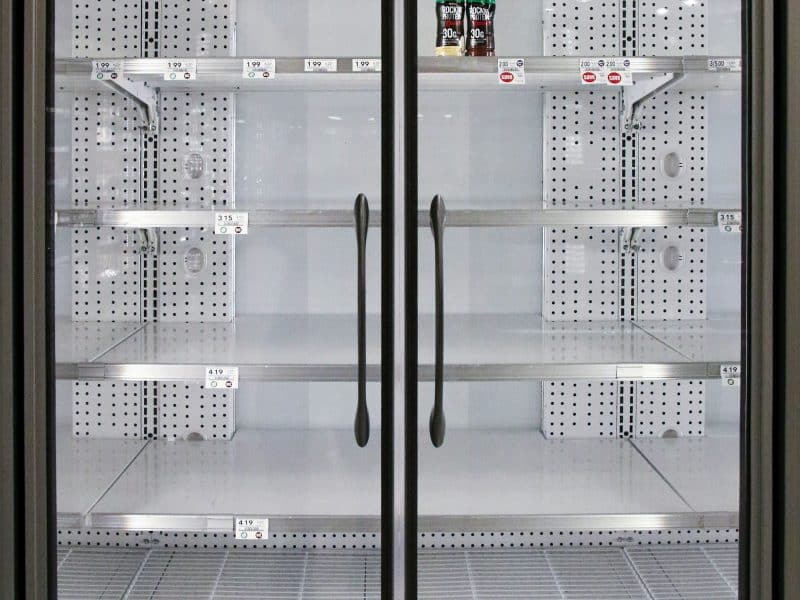
That number is the pass mark for everything else on the visit. A unit that reads 39°F at 6 a.m. and drifts past 41°F during the lunch rush has a problem, even if it looks fine overnight.
The thermometer gets checked too. The rules call for at least one built-in or permanently attached thermometer that is easy to read, with its sensor in the warmest part of the unit.
They also require ambient air thermometers to be kept in good repair and accurate within their range. A display that reads low can hide a unit that is already running warm, so the reading is worth checking against a second thermometer.
Step 2: Clean the Condenser Coil and Confirm Airflow
The condenser coil is where the refrigerator dumps the heat it pulls out of the box. When dust and grease coat the fins, the heat has nowhere to go, the compressor runs longer, and the unit falls behind, often during the busiest part of the day when the doors open most.
Manufacturers take this seriously. True Manufacturing’s installation manual for its TSCI series says the condenser coils “accumulate dirt and require cleaning every 30 days or as needed,” and that a dirty coil can result in repairs the warranty does not cover or in cabinet failure.
The same manual lists the cleaning methods: a soft brush, a shop vacuum, or CO2, nitrogen, or pressurized air. It also says to keep filter material away from the front of the coil, and to call a licensed refrigeration service provider if the dirt will not come off.
Denver’s altitude raises the stakes. Thinner air carries less heat away from the coil, so even a partly blocked coil can leave an air-cooled condenser struggling on a hot afternoon.
During the visit, we clean the coil and then check the condenser airflow, because a clean coil with poor airflow still runs hot.
Step 3: Inspect Door Gaskets, Hinges, and Seals
Every gap around a door lets warm kitchen air into the box, and the system has to pull that heat back out. A torn or flattened gasket can keep a compressor running all day without anyone noticing. That is why door seals get a close look on every routine visit.
Colorado’s rules cover this directly. Section 4-501.11 says equipment parts such as doors, seals, hinges, fasteners, and kick plates must be kept intact, tight, and adjusted to the manufacturer’s specifications.
On a routine visit, we look for:
- Gasket damage: tears, cracks, or sections that have gone hard and no longer seal.
- Door alignment: doors that sag on their hinges or do not close on their own.
- Walk-in extras: worn strip curtains and door hardware on walk-in coolers and freezers.
Catching a failing gasket on a routine visit is far easier than finding it after a compressor has spent months running to make up for it.
Step 4: Verify Refrigerant Pressures, Superheat, and Subcooling
This is the part of the visit that only a technician can do. We connect gauges, read the refrigerant pressures, and measure superheat and subcooling, which show whether the system is charged and metering refrigerant correctly. None of it can be judged from outside the cabinet, which is why it takes gauges and a trained technician.
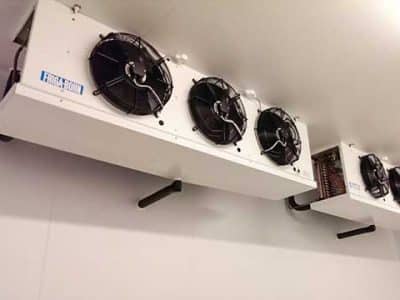
Readings that drift from one visit to the next can be an early sign of a leak or a failing part. On reach-ins, we also verify the TXV, the valve that meters refrigerant into the evaporator.
Leaks carry rules as well as costs. The EPA’s leak repair requirements apply to appliances holding 50 or more pounds of ozone-depleting refrigerant, and for commercial refrigeration the trigger is a leak rate above 20 percent over 12 months.
When a system crosses that line, the owner must repair the leak within 30 days, or within 30 days develop a plan to retrofit or retire the appliance and complete it within a year. Our routine visits include leak detection and logged refrigerant recovery, so those records already exist if a question ever comes up.
Step 5: Test the Defrost Cycle and Clean the Evaporator Coil
The defrost cycle keeps frost from choking the evaporator coil inside the box. When it fails, ice builds up, airflow drops, and the unit slowly loses its ability to hold temperature. It is easy to miss, because the unit keeps running and the problem often shows up as a box that runs a little warmer each day.
Denver’s weather adds a twist. The Chinook Factor can swing outdoor temperatures from 30°F to 70°F in a single day, and controls designed for stable climates can lag or overshoot when that happens.
On the visit, we test the defrost cycle and clean the evaporator coil. A walk-in freezer that defrosts poorly can ice up between visits, so a clean coil and a working defrost go together.
If a unit already shows heavy ice, our post on why a commercial freezer stops freezing covers the most common causes.
Step 6: Clean the Ice Machine and Document the Visit
Ice machines are part of our routine maintenance work, and Colorado’s rules set their cleaning schedule. Enclosed components of equipment such as ice makers must be cleaned at the frequency the manufacturer specifies, or, if there is none, often enough to prevent soil or mold from building up.

Denver’s hard water makes that harder. Mineral scale builds up inside ice machines and water-cooled condensers and acts as an insulator, so the equipment works harder and fails sooner.
Our ice machine maintenance includes:
- Descaling: removing the mineral buildup from the water system.
- Full sanitization: cleaning the inside instead of only rinsing it.
- Water filtration checks: confirming the filter is still doing its job.
- Pump testing: making sure water moves the way it should.
Then comes the paperwork. We document every cleaning for your HACCP logs and leave a written findings report for the whole visit, so you have a record for inspectors and a list of what to plan for next.
The same visit is also the time to flag equipment nearing the end of its life. Our guides on the life expectancy of a commercial freezer and whether a 10 year old freezer is worth fixing help with that decision.

Put Your Commercial Refrigerators on a Routine Maintenance Schedule
A refrigerator that only gets attention when it fails will keep failing at the worst time. Routine maintenance moves that work onto your schedule, before a dirty coil, a torn gasket, or a slow leak costs you a cooler full of product.
At Climate Alignment, we provide commercial refrigeration maintenance across Metro Denver, on all major brands, with every visit documented. When something does break between visits, our commercial refrigeration repair team offers 24/7 emergency service.
To set up routine maintenance for your equipment, call us at (720) 836-9565.
Frequently Asked Questions About Commercial Refrigerator Maintenance
What Is Routine Maintenance on a Commercial Refrigerator in Denver?
It is a scheduled technician visit that checks temperatures, cleans the condenser and evaporator coils, inspects door gaskets, verifies refrigerant pressures, and tests the defrost cycle. In Denver, it also accounts for thinner air at altitude and hard water scale on ice machines. Each visit should end with written documentation.
How often should a commercial fridge be serviced?
We schedule routine visits quarterly for high-volume kitchens and breweries and twice a year at minimum for lower-use sites. Some tasks need more frequent attention between visits; one manufacturer calls for condenser coil cleaning every 30 days or as needed.
What are the recommended preventive maintenance checklists for commercial refrigeration?
A good checklist splits the work by who does it and how often. Our preventative maintenance checklist post covers daily, weekly, monthly, and seasonal tasks, while the technician visit in this post covers the refrigeration circuit itself.
What happens if a commercial refrigerator leaks refrigerant?
For appliances holding 50 or more pounds of ozone-depleting refrigerant, EPA rules require action once commercial refrigeration leaks more than 20 percent of its charge over 12 months. The owner must repair the leak within 30 days or plan to retrofit or retire the appliance. Routine leak checks help catch a leak long before that point.
Can my staff clean the condenser coil between visits?
Many manufacturers expect it, so check your unit’s manual first. One manual lists a soft brush, a shop vacuum, or CO2, nitrogen, or pressurized air, and says to call a licensed refrigeration service provider if the dirt will not come off.
 What Size Refrigerator Is Considered Commercial in Aurora?