

At 10 years, a commercial freezer has earned a decade of service, which is exactly why its first serious failure is hard to call. The repair quote lands on the same afternoon the product is at risk, and nobody wants to pour money into a box that quits again next summer.
A 10-year-old commercial freezer is generally worth fixing when the failure is a single component, and worth a harder look when the failure is in the system itself. That one distinction settles most of these decisions. In Greenwood Village, altitude, Front Range water, and the refrigerant phasedown all shift where that line falls.
At Climate Alignment, our commercial refrigeration work covers walk-in and reach-in freezers across Metro Denver, from a failed fan motor to a full replacement. This post walks through how we make that call, so you can follow the reasoning before anyone quotes you a number.
If your freezer is down or limping right now, contact us and we’ll get it diagnosed before you make either decision.
Where a 10 Year Old Commercial Freezer Actually Stands
Ten years sounds old for a piece of kitchen equipment. In refrigeration terms it means the box is around the middle of its working life, with some components nearer the end of theirs than others.
The Components Rated to Wear Out First
The ASHRAE equipment life data we covered in our post on how long a commercial freezer lasts puts electronic controls and propeller fans at a median of 15 years and electric motors at 18. Those are the parts most likely to fail in the second decade. Fans, motors, and controls are also among the cheaper parts on the system to replace, so an early fan motor or control failure is rarely a reason to retire the whole unit.
The Components With the Longest Life
The same data puts reciprocating compressors, air-cooled condensers, and DX coils at a median of 20 years. At 10 years, those parts are typically short of the halfway point. A compressor that fails at 10 has often been pushed there by something else, which is why the cause matters as much as the failure.
Why the Nameplate Age Misleads
Two freezers built the same year can be in very different shape. One that sat in a cool, clean back room with a scheduled coil cleaning is not the same machine as one that ran next to a fryer line with a fouled condenser. The date on the nameplate tells you when the clock started, not how fast it has been running.
What Greenwood Village Conditions Do to the Math
Every repair-or-replace decision is really a question about how many good years a unit has left. Local conditions shorten or stretch that number, and the Front Range has several that push in the same direction.
Mineral Scale From Front Range Water
Colorado’s hard water leaves mineral scale on ice machines and water-cooled condensers. On the water side of a system, that scale is a layer of insulation that slows the transfer of heat, so the equipment works longer for the same result. If your freezer shares a system or a space with water-cooled equipment, its scale history belongs in the decision.
Elevation and Condenser Run Time
Denver sits at 5,280 feet, where the air is roughly 17 percent less dense than at sea level. Thinner air carries heat off a condenser coil less effectively, so compressors here run longer than the same unit would at the coast. After 10 years, those extra hours add up.
Shoulder-Season Load Swings
Chinook winds can move the temperature from 30°F to 70°F within a day. For a condensing unit on a roof or an outside wall, that means rapid swings in load and more frequent cycling. Every start puts a little wear on the compressor and the electrical parts that bring it online.
Lunch Rush Kitchens in the Tech Center
Greenwood Village takes in part of the Denver Tech Center, and kitchens there serve office lunch crowds on tight service windows. A freezer failure during a weekday lunch rush costs more than the repair invoice. That downtime cost is a real line in the comparison, and it favors whichever option gets the box reliable fastest.
When a 10 Year Old Freezer Is Worth Fixing, and When It Is Not
The failure itself tells you most of what you need to know. Some failures are maintenance events on a healthy system. Others are the system telling you its time is close.
Failures That Are Typically Worth Fixing
These are component failures on an otherwise sound box, and at 10 years they are normally worth repairing, especially if the box held temperature reliably until now:
- Door gaskets and hinges: a torn gasket lets warm, moist air in and makes the whole system work harder.
- Evaporator or condenser fan motors: among the first motors to go, and quick to replace.
- Controls and sensors: a failed control can look like a major fault and turn out to be a small part.
- Defrost components: heaters, timers, and terminators fail on their own schedule and are replaceable.
Failures That Change the Equation
Some failures deserve a harder look before anyone signs off on a repair:
- Compressor failure: one of the most expensive components, and one that may have failed because of a condition that is still there.
- A leak in the evaporator coil: coil leaks can be hard to repair durably.
- Damaged cabinet or insulation: a box that sweats, rusts, or loses its seal can’t be fixed by mechanical repairs.
- The same failure twice in a year: a repeat means the underlying cause was never found.
None of these automatically means replacement. They mean the repair has to be compared against the remaining life of everything else in the box.
The Refrigerant Question
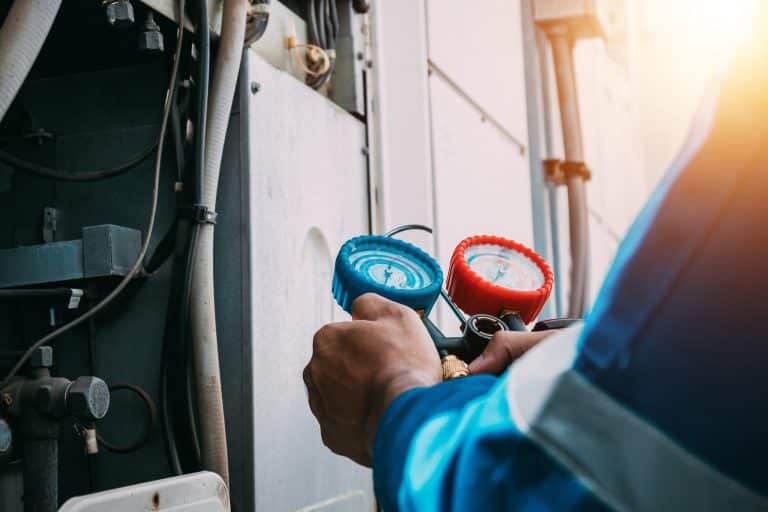
Refrigerant is the part of this decision that changes the most over time. Under the AIM Act, the EPA cut U.S. production and consumption of HFC refrigerants by 40 percent from baseline levels starting in 2024, on the way to an 85 percent reduction by 2036. Existing equipment can still be serviced, but older refrigerants like R-404A are under that phasedown.
That matters most when a repair involves recharging the system. A leak repair on an older refrigerant can be worth it today and a harder sell in a few years. We also retrofit some systems to newer refrigerants such as R-448A when the compressor and coils are in good condition. On a system 10 or more years old, or one with chronic leaks, replacement is often the smarter investment than a retrofit.
How We Work Through a Repair or Replace Decision
Our job is to give you the information to decide, not to make the decision sound obvious. The process is the same whether the box ends up repaired or replaced.
Diagnosis Before Anything Else
We start with a full assessment that includes pressure testing and thermal imaging, and the diagnostic fee credits toward an approved repair. A freezer that is not freezing can have several possible causes. Our post on why a commercial freezer stops freezing walks through them, and the right decision depends on knowing which one you have.
The Options We Put Side by Side
Once the cause is clear, the choice comes down to one of four paths:
| Option | What it involves | Best for |
|---|---|---|
| Component repair | Replacing a fan motor, gasket, control, or defrost part | A box that held temperature reliably until this failure |
| Compressor replacement | New compressor, plus fixing whatever caused the old one to fail | A sound cabinet and coils where the cause is identified and correctable |
| Refrigerant retrofit | Converting the system to a newer refrigerant such as R-448A | Good equipment running an older refrigerant that is getting costly to service |
| Full replacement | New equipment sized and set up for the space and the altitude | Cabinet damage, repeat major failures, or a repair that rivals the cost of new |
If the box is worth keeping, our commercial refrigeration repair team handles the component work, compressors and leak repairs included. If it is not, our commercial refrigeration installation service covers the new equipment, set up for the space it has to run in.
Timing a Replacement on Your Schedule
If replacement is coming within the next year or two, plan it rather than waiting for the next failure. A planned swap can happen in a slow week. An emergency one happens whenever the box decides.
The same planning applies to efficiency. Xcel Energy offers rebates on ECM upgrades and anti-sweat heater controls, so ask about eligibility before any major repair or replacement.
What This Means for Your Greenwood Village Kitchen
A 10-year-old freezer is not automatically on its way out. If the failure is a single component on an otherwise sound system, fixing it is typically the right call.
The harder cases are a failed compressor, a leaking coil, a damaged cabinet, or a box running an older refrigerant that keeps needing recharges. Those deserve a real comparison before anyone writes a check.
We serve kitchens across Greenwood Village, and we’ll tell you plainly which side of that line your freezer sits on. If it fails outright, we provide 24/7 emergency service.
At Climate Alignment, our goal is a freezer you can count on through your next busy season, whether that means a repair or a replacement. To get your freezer diagnosed in Greenwood Village, give us a ring at (720) 836-9565.
Frequently Asked Questions
Is it worth fixing a 10 year old freezer in Greenwood Village?
Generally yes, if the failure is a component such as a fan motor, gasket, control, or defrost part on a box that held temperature well before. A compressor failure, a leaking coil, or a damaged cabinet calls for a closer comparison against replacement. Altitude, Chinook temperature swings, and the refrigerant phasedown all factor into how many good years a Greenwood Village unit has left.
Should I repair or replace my refrigerator?
For commercial equipment, compare the repair cost against the remaining life of everything else in the unit, not just its age. Repair makes sense when the cabinet and major components are sound and the cause of the failure can be fixed. Replacement makes sense when major failures repeat or the repair approaches the cost of new equipment.
Is it cheaper to repair or replace a refrigerator?
A single component repair costs less upfront than a new commercial unit. The real comparison includes energy use, the cost of the next likely failure, and refrigerant costs on older systems. A repair that buys several reliable years is the better value, while a repair that buys one season is not.
How much is a compressor for a freezer?
The price depends on the compressor size, the refrigerant the system uses, and how much labor the installation takes, so any number given without seeing the unit would be a guess. The compressor itself is only part of the cost, because the cause of the original failure also has to be fixed. We quote it after diagnosis, so you can weigh it against replacement.
How to test a freezer compressor?
A technician checks the compressor’s electrical draw, its start components, and the system’s operating pressures against the expected values for that equipment. Those readings show whether the compressor itself has failed or whether something like a bad start relay or a refrigerant problem is making it look failed. Refrigerant work requires EPA certification, so this is a job for a certified technician.
How to repair freezer door seal?
A door gasket that is torn, flattened, or pulling away should be replaced rather than patched. Clean the door frame, fit a gasket made for that model, and check that the door closes fully with even contact all the way around. A failing gasket makes the whole system run harder, so it is one of the cheaper fixes on the list.
How to dispose of an old freezer?
Under EPA rules, refrigerant must be recovered before a refrigeration unit reaches final disposal. On commercial systems taken apart on site, a certified technician does the recovery. Before an old unit leaves, confirm who is responsible for recovering its refrigerant.
What is the compressor side of a freezer?
The compressor side of a freezer is the high-pressure side of the system, which includes the compressor, the condenser, and the parts that push heat out of the box. On many commercial freezers this side sits outside the cabinet, on a rooftop or in a remote location. At Denver’s elevation this side does extra work, because the condenser is rejecting heat into thinner air.
 How Often Should Commercial HVAC Units Be Serviced in Denver, CO?
